
Dental veneers: aesthetic care begins with diagnosis.
Veneers are restorative options that can address smile aesthetics. Their suitability depends on tooth structure, bite, oral health, and what is possible in each case.
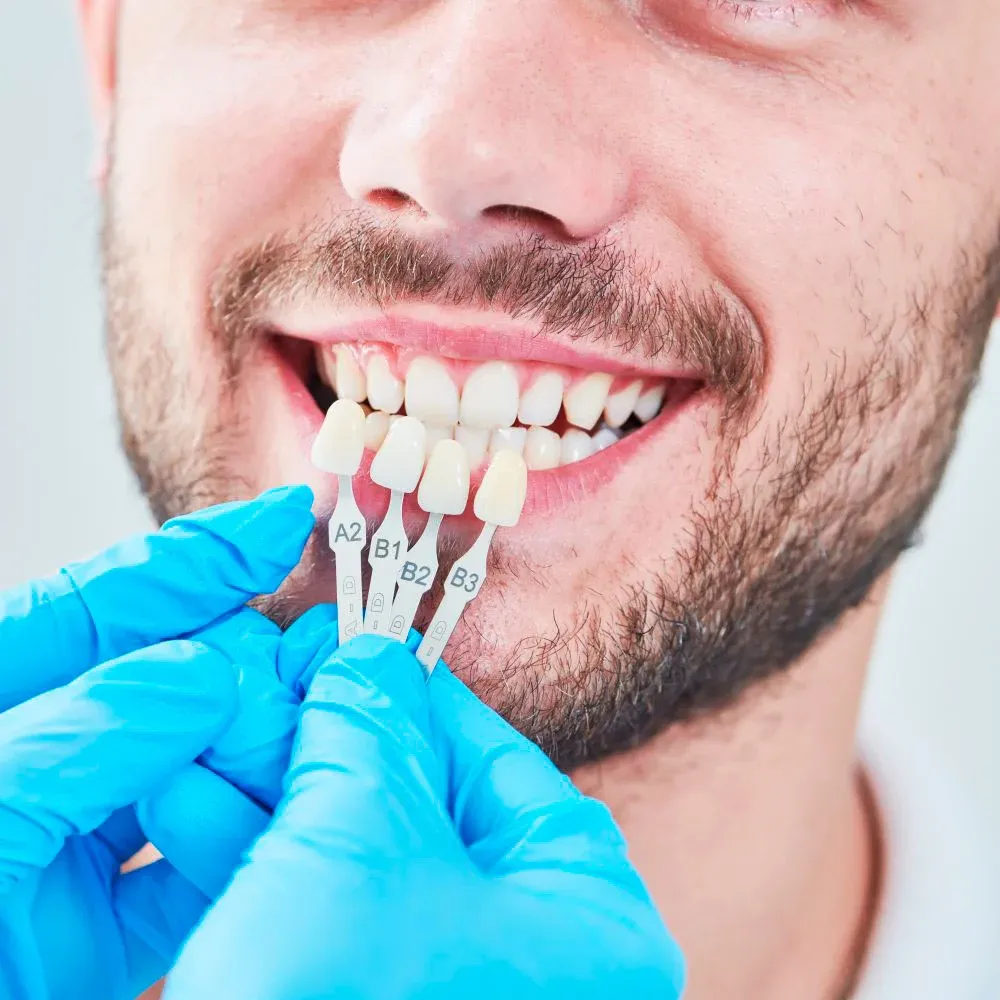
A clinical decision, not a catalog.
A natural look calls for proportion and judgment. Before any intervention, form, color, function, and expectations must be understood — including when a different approach may be better.
The recommendation, treatment steps, and estimated duration can be confirmed only after an individual assessment.
Who may benefit.
- Clinically assessed changes in tooth shape, proportion, or color
- Cases with oral health compatible with the procedure
- Patients seeking a planned, individualized aesthetic decision
What this approach offers.
Planning guided by smile harmony
Individual choice of shape, proportion, and shade
Joint assessment of aesthetics and function
A plan grounded in realistic expectations
How treatment progresses.
Each stage supports the next decision.
- Talk
Understand expectations, priorities, and patient history.
- Diagnose
Assess teeth, gums, bite, and suitability for the procedure.
- Plan
Define materials, proportions, and sequence when indicated.
- Follow up
Explain care and monitor the result after treatment.
Information that supports precision.
Photographs, imaging, and digital records may support aesthetic assessment and communication of the plan before treatment.
Explore Uniorto technologySpecialist-led care.
Dr. Alcides Gomes Júnior specialized in orthodontics at UNESP and holds a master's degree in temporomandibular disorders from UNIFESP. CRO/SP 42650.
Frequently asked questions.
Are veneers right for everyone?
No. Tooth structure, gum health, bite, and expectations need assessment. Whitening, orthodontics, or another approach may be more appropriate.
Can the result be selected from a photo alone?
References can help the conversation, but planning must respect facial proportions, tooth characteristics, and individual clinical limits.
What is the difference between types of veneers?
Terms may refer to differences in thickness, material, and tooth preparation. The appropriate technique is defined only after clinical assessment.
Good care begins with a conversation.
Tell us briefly what you are looking for. The Uniorto team will contact you to explain the next step and arrange your consultation.